Sequenex

Biosensors

Biosensor Capabilities: What Can We Measure?

What biosensors can measure, how they do it, and how to take advantage of these advances to build an innovative wearable or connected medical device. Under the FDA’s 2026 guidance, software that analyzes a continuous biosensor signal — a CGM glucose stream, for example — is treated as a medical device.
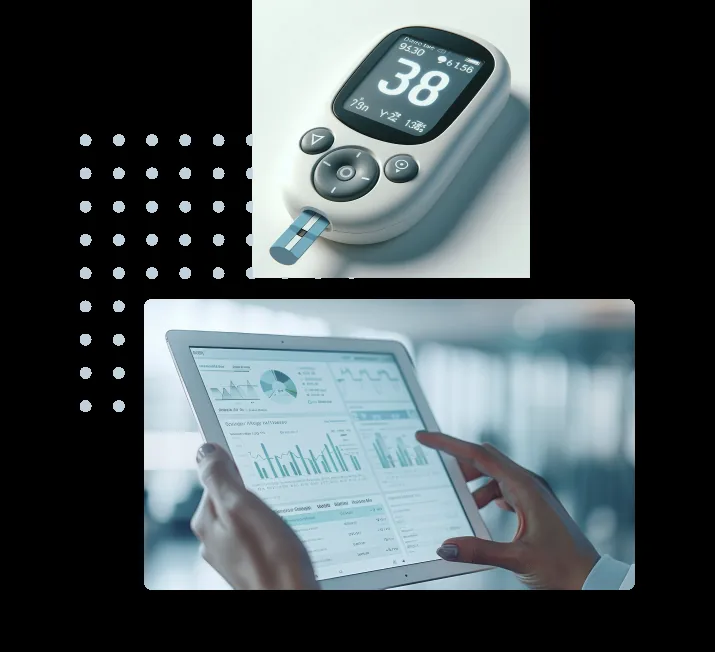
Biosensor and connected-device expertise

Types of biosensors

ElectrochemicalOpticalFET-basedPiezoelectricBioluminescenceSemiconductorAntibody (immunoassay)ThermalNucleic acid-basedNIR spectroscopyIon-selective electrodeColorimetricFluorometricFlow cytometry-based

What can we measure?

Measurable parameters across biosensor categories.

Enzymes & proteins

  • Creatinine
  • Hemoglobin
  • C-Reactive Protein (CRP)
  • Bilirubin
  • Albumin
  • ALT
  • AST
  • GGT
  • Creatine Kinase (CK)
  • Fibrinogen
  • Cystatin C

Cardiac & cardiovascular

  • Oxygen saturation
  • Heart rate
  • Blood pressure
  • Troponin
  • BNP
  • Prothrombin Time (PT)
  • aPTT
  • D-Dimer

Blood components & metabolites

  • Glucose
  • Lactate
  • Cortisol
  • Uric acid
  • Cholesterol
  • Hemoglobin A1c
  • White blood cell count
  • Red blood cell count
  • Platelet count
  • Neutrophil count
  • GFR
  • Insulin

Lipids, nutrients & ions

  • Electrolytes
  • Sodium
  • Potassium
  • Calcium
  • pH
  • Vitamin D
  • Triglycerides
  • Vitamin B12
  • Magnesium
  • Zinc

Hormones

  • TSH
  • Free Thyroxine (FT4)
  • PSA
  • Estradiol
  • Testosterone
  • Catecholamines

Other markers

  • Alcohol
  • Body temperature

Using biosensors to advance medical care

Real-time data and multi-sensor wearables are reshaping outcomes: nano-biosensors for early molecular-level detection, AI-integrated wearables for continuous automated monitoring and predictive analytics, lab-on-a-chip point-of-care diagnostics, and telemedicine integration for remote monitoring.